

What Is a Tac Light?
A tac light is more than a bright flashlight. Learn what separates tactical lights from ordinary utility lights, how lumens and candela affect performance, what matters in a weapon-mounted light, and where IR, batteries, durability and controls fit into the equation.
“Tac light” is shorthand for tactical flashlight. It generally describes a compact, high-performance light designed for demanding professional, outdoor or defensive use, where durability, reliable controls and usable beam performance matter as much as raw brightness.
That distinction matters because modern LED technology has blurred the line between tactical and consumer flashlights. A basic flashlight can now produce impressive lumen numbers, but brightness alone does not make a light tactical. Construction, beam intensity, switching, power source, water resistance, recoil tolerance and the ability to integrate with other equipment all help determine whether a light is built for hard use.
A tac light is a rugged, high-output flashlight built around dependable illumination and intuitive operation in demanding conditions. Some are handheld, while others are specifically engineered to mount on firearms.
Tac Light vs. Regular Flashlight: What Is the Difference?
The biggest difference is design intent. A regular utility flashlight is usually built around everyday jobs such as finding a breaker box, looking under a vehicle or walking through the backyard. A tactical flashlight is built around situations where the light may be dropped, exposed to weather, operated under stress or used repeatedly in harsh conditions.
A tac light therefore tends to combine higher output with tougher materials, more deliberate switch design, stronger water and impact resistance, and features such as momentary activation, lockout modes or weapon-mounting capability. Consumer flashlights are often optimized around convenience and price. Tactical lights place more emphasis on reliable performance when conditions are less forgiving.

Brightness Is Only Part of the Equation
A useful tactical light combines output with beam intensity, rugged construction, weather resistance, a dependable power source and controls that can be operated quickly without unnecessary fumbling.
Key Features That Define a Tac Light
Rugged Construction
A tactical light is expected to tolerate a hard life. Common body materials include anodized aluminum alloys and reinforced nylon, both of which can provide strength without excessive weight. A quality light should also be built with impact, water and temperature exposure in mind rather than treating those protections as afterthoughts.
Useful Beam Output
High output helps illuminate rooms, terrain and potential hazards, while a well-designed reflector or optic shapes that light into a usable beam. Many tactical lights combine a bright central hotspot for distance with spill that preserves awareness of the surrounding area.
Intuitive Controls
Tactical lights commonly use large, textured controls that can be found by feel. Depending on the model, those controls may support constant-on, momentary-on or strobe operation, and professional-grade designs often accommodate operation from either side of the light.
Color Temperature
LED color temperature is measured in Kelvin (K). A light around 5000K produces a neutral white appearance comparable to direct daylight, making it well suited to applications where clear, bright illumination is the priority. A more detailed explanation of Kelvin color temperature can be found here.
Safety and Lockout Features
On a weapon-mounted light, accidental activation can drain batteries, create unwanted light output or complicate storage and transport. Dedicated safety levers and mechanical or electronic lockout modes help prevent unintended activation until the user is ready to operate the light.
Lumens and Candela
Lumens measure the total amount of light produced by a flashlight. That number is useful for understanding overall output, but it does not tell you by itself how intense the beam will be at distance once the LED's light is shaped by a reflector or optic.
Candela measures luminous intensity in a particular direction. In practical terms, candela helps describe how strongly a flashlight concentrates light into its beam and is therefore important when you care about distance or a pronounced hotspot.
A light can have high lumen output without producing extreme throw, and a lower-lumen light can still project strongly if its optic concentrates that output. Tactical-light performance makes more sense when lumens and candela are considered together rather than treating either specification as the whole story.
Batteries and Battery Life
High-output tactical flashlights commonly use CR123A batteries or rechargeable lithium-ion batteries because those chemistries are well suited to delivering the power demanded by high-performance LEDs. Battery choice varies by model, and runtime changes substantially with output level.
A high-powered tactical light may provide only a few hours of runtime at its highest setting, while a much lower-output utility flashlight can run far longer on alkaline batteries. That is not necessarily a disadvantage. It reflects the tradeoff between maximum output, battery capacity, size and runtime.
High-Powered Tactical Light
CR123A or rechargeable lithium-ion batteries are common because they can support compact lights with substantial output. Runtime depends heavily on the selected mode and output level.
Regular Utility Light
AA or other alkaline batteries can provide long runtimes when the light is producing substantially less output, making them practical for general-purpose illumination.
Understanding IP Ratings
Professional-grade flashlights often carry an IP, or Ingress Protection, rating. The code describes how well an enclosure protects against the entry of solid objects such as dust and against water. The first digit addresses solid-particle protection, while the second addresses water protection.
Ratings such as IP68 indicate a high degree of protection against both dust and water under the conditions defined by the applicable standard. Because test conditions matter, the manufacturer's stated depth, duration or other limitations should still be checked for the specific light. A more detailed explanation of IP ratings can be found here.
What the rating communicates: the IP code provides a standardized way to describe resistance to solids and water, but it does not replace the product's specific immersion, operating or environmental specifications.
Weapon-Mounted Tac Lights: What Matters?
Mounting a tac light directly to a firearm changes the requirements. The light has to tolerate repeated recoil, stay secure on the weapon and place its controls where the user can activate them without unnecessarily changing grip or hand position.
Recoil Resistance
A weapon light experiences the same repeated shock cycles as the firearm. Its electronics, lens assembly, housing and mounting interface therefore need to withstand recoil without loosening or failing during use.
Rail Compatibility
MIL-STD-1913 Picatinny rails are common on rifles and other platforms, while some handguns use Glock-pattern or proprietary accessory rails. The mounting interface on the light must match the firearm or the appropriate adapter system.
Activation Method
Thumb switches, integral paddles, pressure pads and remote switches all provide ways to activate a weapon light. The best choice depends on the platform and the user's preferred setup, but the goal is the same: quick, predictable operation without unnecessary movement.
Safety and Storage
Lockout systems or safety levers are especially useful on weapon-mounted lights because they can help prevent accidental activation during transport or storage. They can also reduce unnecessary battery drain when the light is not in use.
Legal Considerations
Laws governing firearms and accessories can vary by jurisdiction. Users should verify the rules that apply to their specific firearm and location before configuring or carrying a weapon-mounted setup.
For a deeper look at choosing and running a weapon-mounted light, see INFORCE's complete weapon-light guide.
What Is IR Mode on a Tac Light?
Some tactical lights add infrared illumination alongside standard white light. IR output is invisible to the naked eye but can be seen through compatible night vision devices, allowing a user to illuminate an area without producing visible white light.
That capability is common in military and law-enforcement equipment used with night vision. Civilian users may also value IR for night-vision training, hunting and property use when their equipment and local regulations support those applications.
Who Uses Tac Lights?
Tactical flashlights are used by law enforcement officers, military personnel, armed citizens, search-and-rescue workers, survivalists, mechanics, hunters, outdoorsmen and EDC users. What those groups have in common is a need for compact illumination that can tolerate harder use than a basic household flashlight.
Handheld tactical lights are useful for general navigation, inspection, signaling and everyday carry. Weapon-mounted models let the user keep the light integrated with the firearm, while IR-capable models can work alongside compatible night vision equipment.

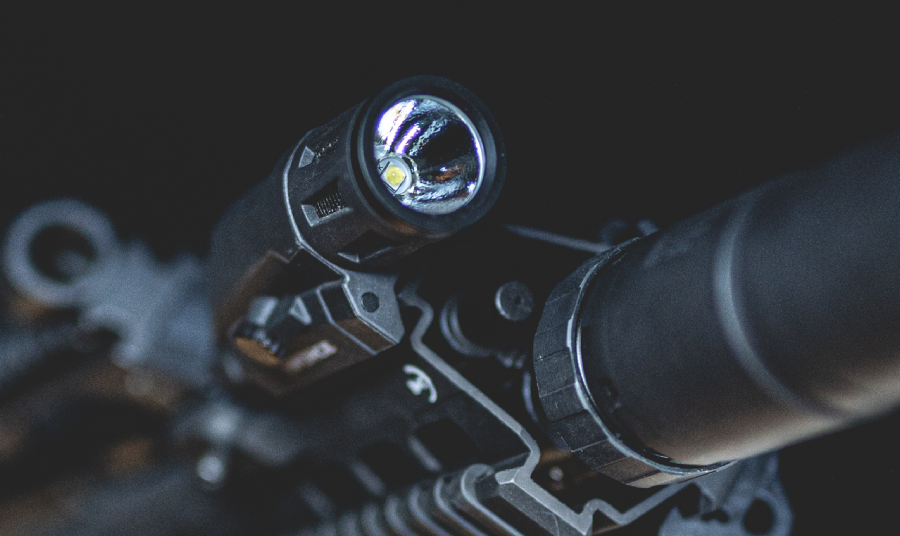
A Tac Light Built for the Rifle: WMLx Gen 3
For shooters who need a purpose-built rifle light, the INFORCE WMLx Gen 3 combines a compact weapon-mounted design with the features discussed throughout this guide. It produces 900 lumens and 10,000 candela, with a stated beam distance of 656 feet, and runs for up to two hours on two CR123A batteries.
Its glass-reinforced nylon body is designed for hard use and is waterproof to 66 feet. An integrated safety lever helps prevent accidental activation, while a quarter-turn of the head engages lockout mode for transport and storage. The integrated clamp mounts directly to MIL-STD-1913 rails without tools.
The IR version adds 1W of infrared output for use with compatible night vision equipment. The WMLx Gen 3 is engineered and assembled in the USA and backed by INFORCE's lifetime warranty to the original owner.
White Light
900 lumens and 10,000 candela provide general-purpose visible illumination in a dedicated rifle-mounted package.
IR Version
Adds 1W infrared illumination for users operating compatible night vision equipment.
Frequently Asked Questions
What does “tac light” mean?
“Tac light” is shorthand for tactical flashlight. It generally refers to a rugged, high-performance light intended for demanding professional, outdoor or defensive use.
What makes a tac light different from a regular flashlight?
A tac light combines usable output with a compact, durable design and controls intended for quick, dependable operation. Tactical models may also include stronger water resistance, momentary activation, lockout features, recoil resistance, strobe modes or firearm-mounting capability.
What is the difference between lumens and candela?
Lumens measure total light output, while candela measures luminous intensity in a particular direction. Lumens help describe how much light a flashlight produces overall, while candela helps describe how strongly that light is concentrated into the beam.
How many lumens should a tactical flashlight have?
Many modern high-performance tactical flashlights fall around 500 to 1,000 lumens or more, although the right output depends on the intended use. Candela and beam shape should be considered alongside the lumen rating.
What type of batteries do tac lights use?
High-output tactical flashlights commonly use CR123A batteries or rechargeable lithium-ion batteries. The correct battery type and expected runtime depend on the individual flashlight.
What does an IP rating mean on a flashlight?
An IP, or Ingress Protection, rating describes protection against solids such as dust and against water. The first digit covers solid-particle protection and the second covers water protection.
Can you mount a tac light on any firearm?
No. Weapon lights must match the firearm's mounting interface. MIL-STD-1913 Picatinny rails are common on rifles, while handguns may use Glock-pattern or proprietary accessory rails.
Why is recoil resistance important in a weapon-mounted light?
A weapon-mounted light is repeatedly subjected to the firearm's recoil. Its electronics, lens, housing and mount need to withstand that shock without loosening or failing.
Do weapon-mounted tac lights need safety or lockout features?
Safety levers and lockout modes are useful because they help prevent accidental activation during storage or transport and can reduce unnecessary battery drain.
What is IR mode on a tac light?
IR mode provides infrared illumination that is invisible to the naked eye but visible through compatible night vision devices. It is used in military, law-enforcement and civilian night-vision applications.
What is strobe mode used for?
Strobe mode rapidly flashes the beam and may be used for signaling or defensive applications. It is common on some tactical lights but is not a universal requirement.
Who uses tactical flashlights?
Tactical flashlights are used by law enforcement officers, military personnel, armed citizens, search-and-rescue workers, survivalists, mechanics, hunters, outdoorsmen and EDC users who need compact, rugged illumination.


